When non-continental deliveries fail: what retailers should do
When a package to Alaska, Hawaii, Puerto Rico, or a US territory cannot be delivered, retailers and 3PLs need clear next steps. Learn how to check tracking updates, prevent address errors, and handle Return to Sender expectations.
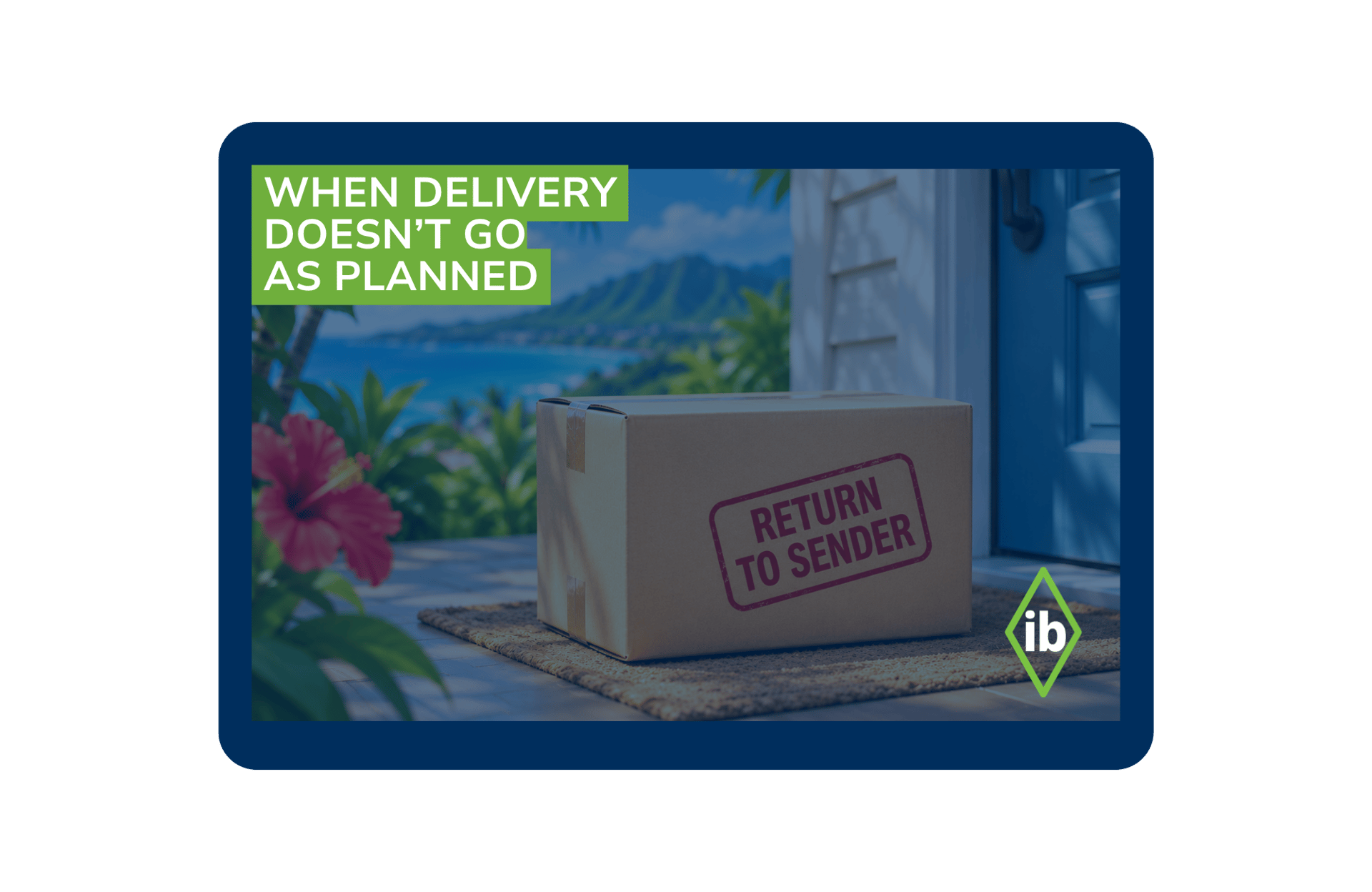
An undeliverable package creates extra work for a retailer or 3PL: checking the shipment, updating the buyer, and understanding the cause. A missing unit number, missed pickup, or refusal can interrupt delivery.
A delivery exception is a tracking update that shows a shipment needs attention. Check the exact status and contact your shipping provider to find out whether delivery is still possible, the parcel is being held, or a return has begun.
This matters especially for non-continental US destinations, where address formats and transportation schedules can be different from those on the mainland. International Bridge helps businesses ship small parcels to these destinations through its IB Non-Con logistics network.
What causes failed deliveries to non-continental US destinations?
A package may be marked undeliverable for several reasons:
· Incorrect or incomplete address. A missing unit number, wrong ZIP Code, or other address error can prevent delivery.
· Recipient refusal. The recipient declines to accept the shipment.
· Unclaimed package. The shipment is not collected within the holding period allowed by the carrier.
· Delivery access problem. An access restriction or other local condition prevents delivery.
· Unknown recipient. The delivery carrier cannot match the addressee to the location.
A failed delivery attempt does not always mean the package is on its way back. Some services allow another attempt or a pickup period before a return is started.
What should retailers and 3PLs do after a failed delivery?
Whatever the reason shown in tracking, the first action is the same: contact the shipping provider. Share the tracking number, the full delivery address, and the exact status message. The provider can confirm whether the package is still awaiting delivery, is being held, or has entered the return process.
Next, give the customer an update based on the confirmed status. Avoid promising a redelivery, address change, or return date unless the shipping provider has confirmed that option.
Keep a record of the status, its cause, and the response. If similar problems affect several orders, compare the checkout address, shipping label, and destination settings to find a problem you can correct before the next shipment.
How can retailers prevent address-related delivery failures?
Checking addresses before creating labels is one of the simplest ways to reduce avoidable delivery failures. These four destination-specific checks are especially useful for non-continental shipping.
Puerto Rico: keep the urbanization information
Some Puerto Rico addresses include an urbanization name, often written with the prefix URB. It can help distinguish streets that otherwise look similar within the same ZIP Code. Keep this information when transferring the address from checkout to the shipping label, following USPS Publication 28.
Military addresses: use APO, FPO, or DPO correctly
Military and diplomatic mail uses APO, FPO, or DPO as the city and AA, AE, or AP as the state abbreviation, together with the correct unit or box and ZIP Code. Do not add a foreign city or country name to this address format. The USPS military-address rules explain the required fields.
Remote Alaska: check the community, not just the state
Some Alaska communities have road access, while others depend on scheduled air or ferry connections. The community and its transportation schedule affect the delivery window and how a delay should be investigated. Check the specific destination before setting expectations for the buyer.
Guam: validate the full ZIP Code
Guam has 13 assigned five-digit ZIP Codes. Other Pacific destinations also use ZIP Codes starting with 969, so that prefix alone cannot identify Guam. Use the correct destination code and the exact ZIP Code; see IB's Guam shipping guide for the list and setup examples.
Example: If several Puerto Rico orders show an incomplete-address exception, compare the checkout address with the printed shipping label. A missing URB line may indicate that a field was lost between the store and the label system. Correct the mapping before the next batch ships.
When should a retailer treat a shipment as Return to Sender?
Return to Sender (RTS) is the carrier process for sending an undeliverable or refused package toward the appropriate return address. A delivery attempt or a package being held for pickup is not the same as a confirmed return. Check the carrier status before updating the order.
For IB shipments handled by USPS at the final mile, a package that enters the USPS return stream follows USPS return procedures. It may pass through several facilities before reaching the return address.
A tracking status showing that return processing has started does not prove that the sender has received the parcel. Retailers should keep the latest tracking event separate from confirmed receipt.
What should retailers tell buyers about a package being returned?
Explain that the carrier is handling the return and that it may follow a different route from the original delivery. Transportation schedules, sorting, and carrier handoffs can affect the journey from a non-continental destination.
Share the latest verified tracking event and explain when your team will check for an update. A gap between scans does not always mean the package has stopped moving.
Avoid using an outbound delivery estimate as the promised return date. The retailer handles any refund or replacement decision; the shipping provider can clarify the parcel status and supported transportation options.
How can retailers and 3PLs prevent repeat delivery exceptions?
· Check the full address, including unit numbers, destination codes, and required local fields, before creating the label.
· Test checkout and shipping-platform settings for Puerto Rico, military addresses, Guam, and remote Alaska.
· Monitor delivery exceptions and contact the shipping provider when a problem appears.
· Keep customers informed using verified tracking information rather than an assumed delivery or return date.
· Review recurring address and delivery issues, then improve your order forms and support instructions.
How International Bridge supports non-continental shipping
International Bridge is a small-parcel shipping logistics intermediary. Through IB Non-Con, we help retailers, marketplaces, and 3PLs reach customers in Alaska, Hawaii, Puerto Rico, US territories, and military addresses.
For businesses reviewing their shipping setup, the useful questions are practical: Are the address fields reaching the shipping label correctly? Is the selected service available for each destination? What tracking events help the team act when delivery fails? Bring real exception statuses and destination examples to a conversation with IB about your shipping setup.
Frequently asked questions
What should a retailer do after a delivery-attempt notification?
Check the exact tracking update before telling a buyer that the parcel is being returned. Some services allow another attempt or a pickup period. Ask the shipping provider what action, if any, is available for that shipment.
What details should a retailer share when asking about a delivery exception?
Start with the shipping provider and provide the tracking number, complete address, and exact status message. Include the destination ZIP Code and any local address details, such as a Puerto Rico urbanization. This gives the provider the information needed to check the shipment under the selected service.
What should retailers tell buyers when a parcel is marked Return to Sender?
Explain that the carrier has begun return handling and share the latest confirmed tracking event. The return route and timing may differ from the original delivery. Avoid promising a receipt date unless the shipping provider has verified one.
How can a 3PL identify preventable address problems across orders?
Group failed deliveries by destination, carrier status, and reported cause. Compare repeated issues with the addresses collected at checkout and printed on shipping labels. Update the field mapping or label rules when they are contributing to failures.
Review failed-delivery patterns and address validation with IB
Shipping to Alaska, Hawaii, Puerto Rico, and US territories calls for destination-aware address and service settings. Talk with International Bridge about non-continental shipping coverage, label-data requirements, and the delivery information available for your lanes.
Contact International Bridge to learn more about IB Non-Con shipping solutions.
Continue reading
· IB Non-Con: shipping to non-continental destinations
· Shipping to Puerto Rico for businesses: checkout and address checks