Non-continental shipping for 3PLs
A 3PL's mainland US network runs on density and speed. Hawaii, Alaska, Puerto Rico, and APO/FPO/DPO addresses sit outside that reach. This is the layer a 3PL extends into to cover them, without building the lane itself.
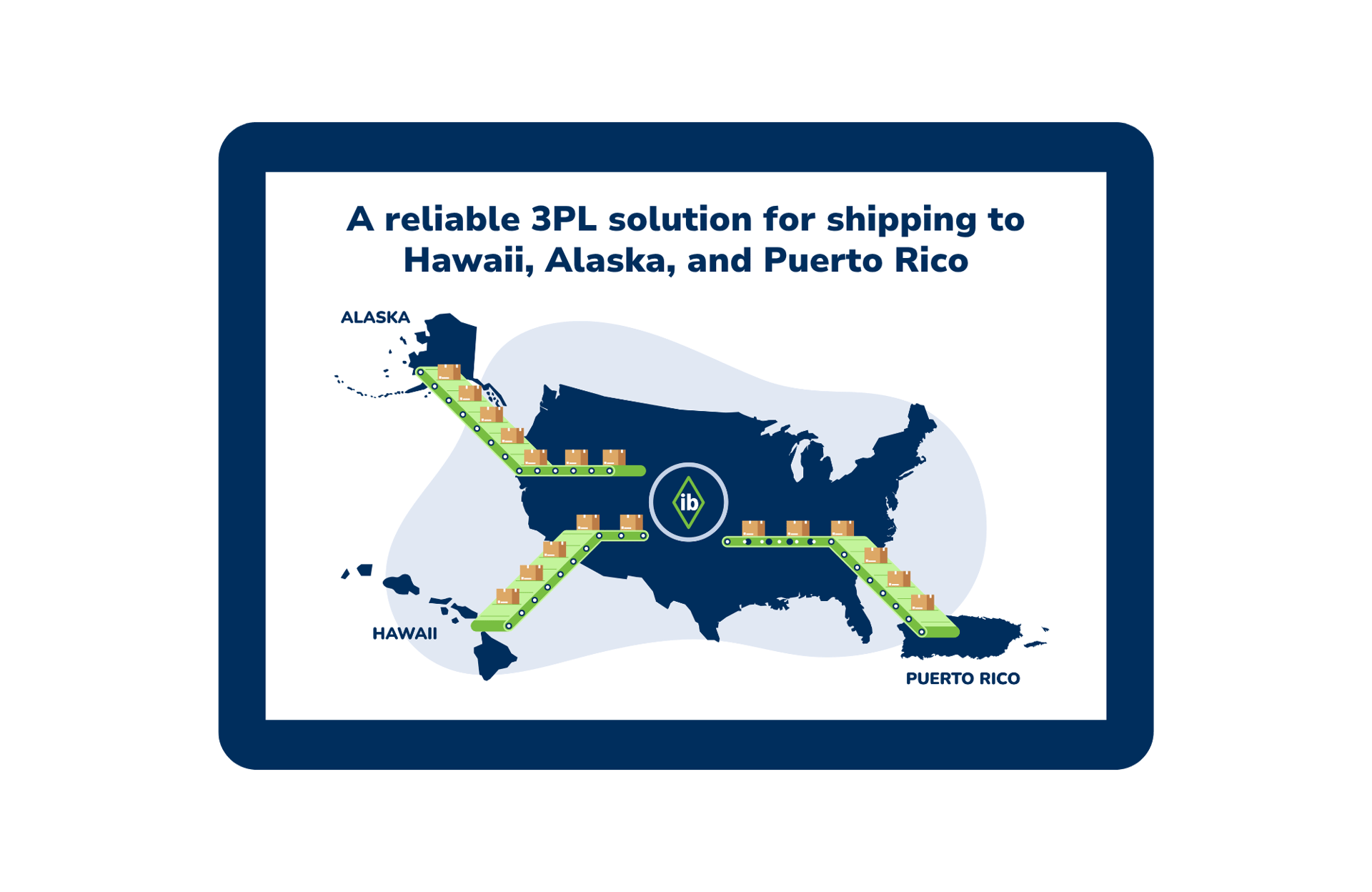
A 3PL earns its margin on the mainland US through density and speed. Trucks move between zones on a continuous ground network, and cost per parcel falls as volume climbs. Hawaii, Alaska, Puerto Rico, the US territories, and APO/FPO/DPO addresses sit off that network. These are the non-continental US destinations, the domestic markets beyond the contiguous 48 states. The ground network that keeps a mainland lane efficient does not cross the water.
Together, Hawaii, Alaska, and Puerto Rico are home to more than five million US residents, per the US Census Bureau. For a 3PL, that is real order volume a client is often leaving unserved. International Bridge (IB) has moved parcels across these lanes for more than two decades. IB Non-Con is the layer a 3PL extends into to reach them, and it runs on the systems the 3PL already uses.
For the architectural view of how non-continental delivery performs across all three primary destinations, read the definitive guide to shipping to Hawaii, Puerto Rico, and Alaska.
Which non-continental markets open up for a 3PL?
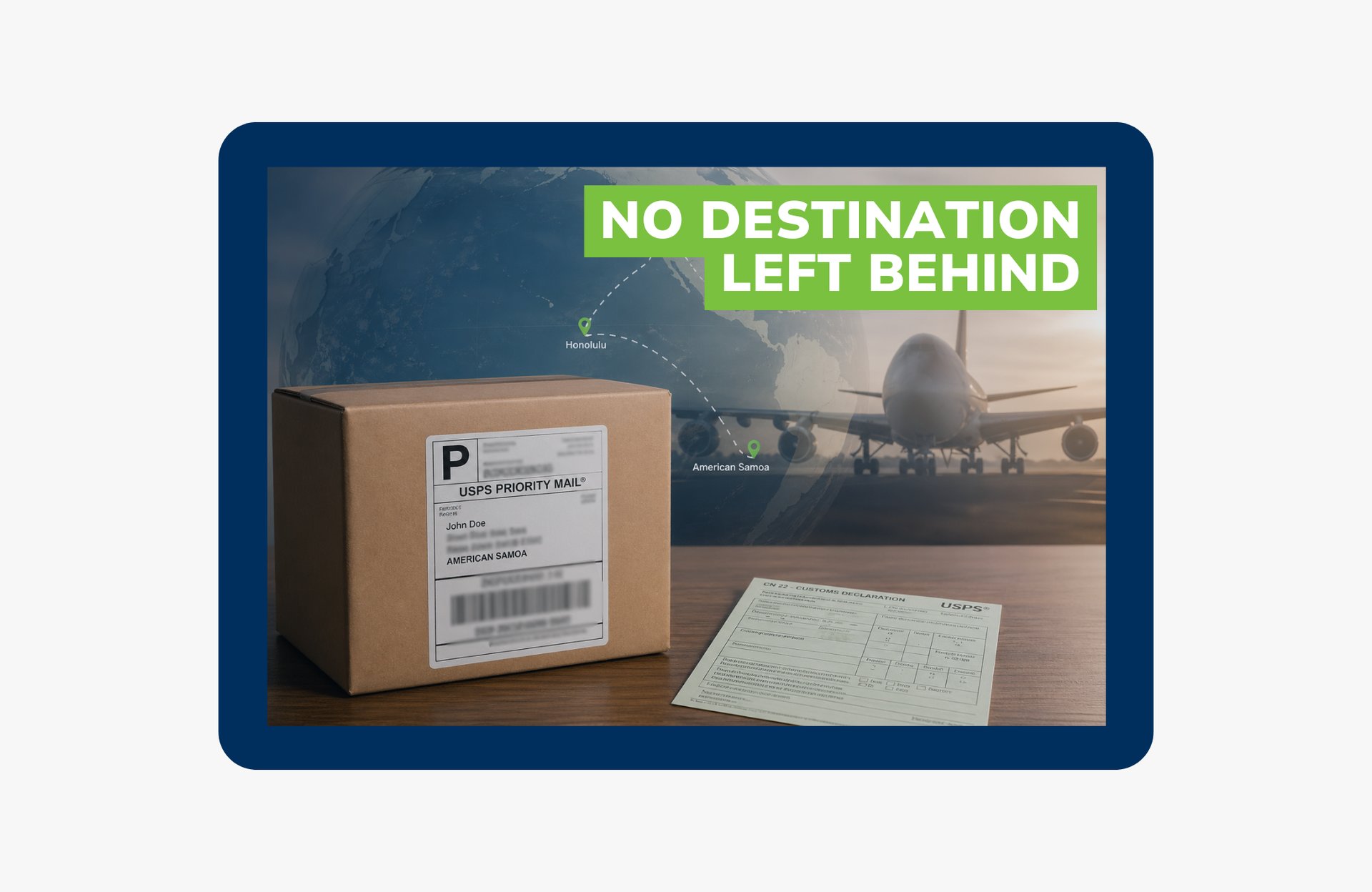
A 3PL can reach five non-continental markets: Hawaii, Alaska, Puerto Rico, the US territories (Guam, the US Virgin Islands, American Samoa, and the Commonwealth of the Northern Mariana Islands), and APO/FPO/DPO military addresses. Each one depends on an air leg, local facilities, and disciplined handoffs, none of which a contiguous-48 rate card is built to price.
The strain shows up in three ways a fulfillment team will recognize. Transit times stretch when parcels route indirectly. Costs rise when carriers apply surcharges sized for a lane they did not engineer. And some clients respond by capping or excluding these destinations at checkout, which quietly limits their own addressable market.
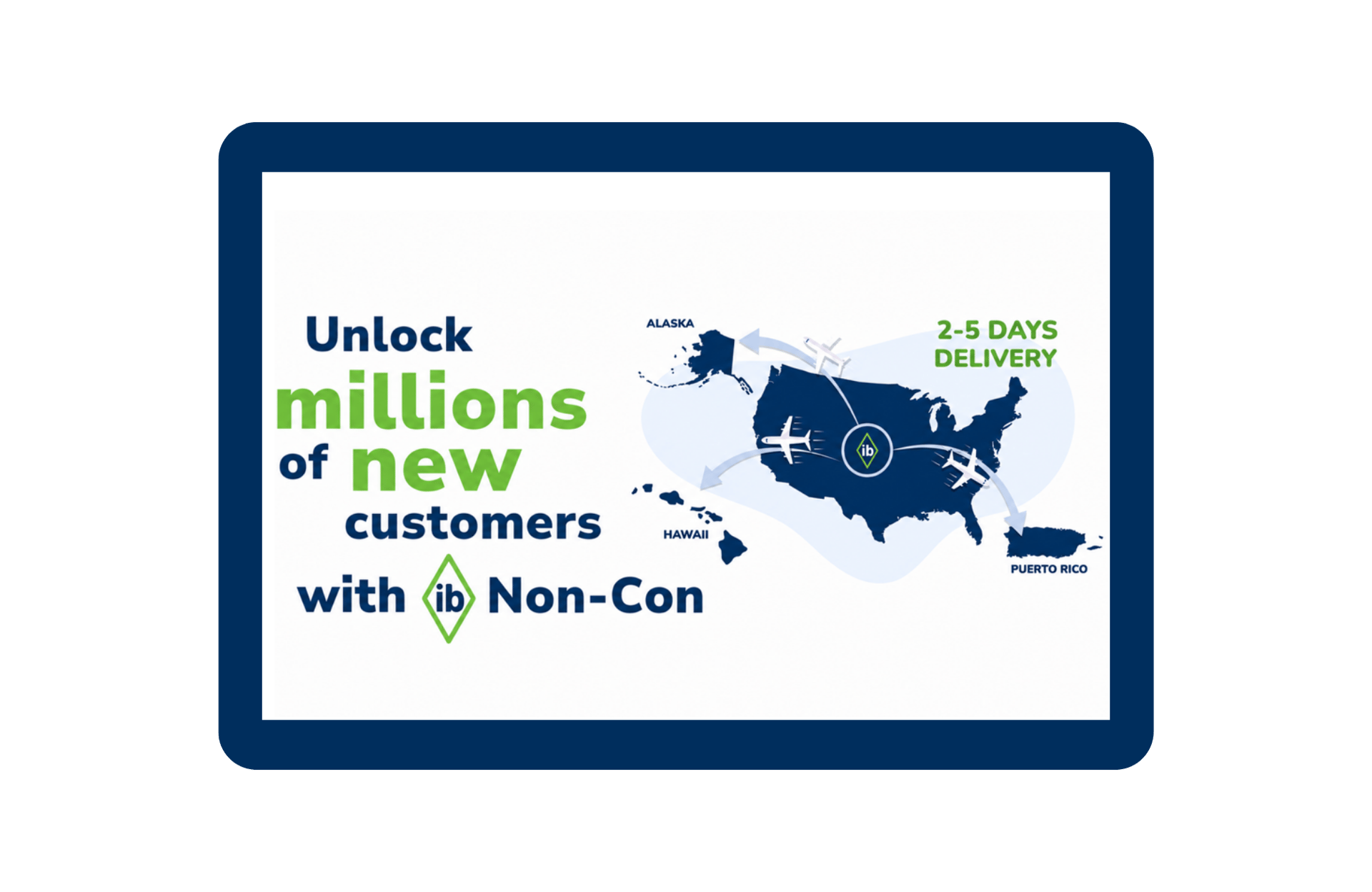
IB Non-Con is built for these lanes specifically. Across Hawaii, Alaska, and Puerto Rico, delivery lands within a 2-5 business day window under normal operating conditions. Destination specifics live on the Hawaii shipping page, Alaska shipping page, and Puerto Rico shipping page.
How does IB fit into a 3PL's existing operation?
IB connects through the integration and fulfillment systems a 3PL already runs, so the non-continental lane becomes another label the operation prints, managed inside the same workflow.
IB integrates with ProShip, ShipStation, Shipium, Asendia and ShipHero. Onboarding is handled by an in-house IT team, and tracking runs on software developed in-house. Scans and delivery events flow back into the 3PL's stack with the same visibility as a mainland shipment.
Where volume allows, consolidation lowers the landed cost. Box of Savings pools multiple small parcels into a single shipment before they enter the air network, which reduces non-continental shipping costs by approximately 30%. For a 3PL running many small orders into the same markets, that protects margin on every consolidated shipment.
Chas Gorham, Vice President of Sales at International Bridge, has made the 3PL case both in his own writing and on the Asendia USA podcast:
Chas Gorham, Vice President of Sales, International Bridge
The operational pattern is consistent. 3PLs that struggle with these markets tend to treat Hawaii, Alaska, and Puerto Rico as one-off exceptions, so every order becomes a manual decision. The ones that handle it well set the non-continental lane up once and let it run like any other lane. When a client stops excluding these destinations at checkout, the orders that were always there start moving.
For most shippers these destinations are a small share of total volume, which is why few carriers build for them. That small share is where the late order and the client call tend to show up. Daily flights from IB facilities in each market hold the 2-5 business day window in place.
Hear more from Chas on the non-continental case for 3PLs on the: Outside the Box with Asendia USA, Episode 28 (June 2026)
How does a 3PL unlock non-continental market for its clients?
For a 3PL, non-continental coverage is a service a client can see. When the 3PL can quote a reliable 2-5 business day window to Hawaii, Alaska, and Puerto Rico, the client can turn these destinations back on at checkout and market to customers it had been screening out. These markets deserve the same operational attention as any mainland lane, and a 3PL is well placed to give it.
The same network reaches beyond the three primary destinations. Military and diplomatic addresses carry their own routing and documentation, and the complete guide to APO/FPO/DPO shipping covers how those parcels move. The four US territories each carry their own customs handling, and the shipping to US territories operational guide works through them one by one. A 3PL can offer all of it through a single non-continental connection.
Frequently asked questions
Can one network cover Hawaii, Alaska, Puerto Rico, and the US territories for a 3PL?
Yes. A network built for non-continental lanes handles all of these destinations through one connection, because each depends on the same air-and-local-facility model. For a 3PL, that means a single integration covers every market beyond the contiguous 48 states.
How long does non-continental delivery take for a 3PL's clients?
Delivery to Hawaii, Alaska, and Puerto Rico lands within 2-5 business days under normal operating conditions. The window holds because air capacity and local handoffs are engineered for these lanes in advance. A 3PL can quote that range to clients as a dependable commitment.
How does IB integrate with a 3PL's existing systems?
IB connects through ProShip, ShipStation, Shipium, ShipHero and Asendia. Onboarding is handled by an in-house IT team, and tracking runs on software developed in-house, so delivery events return to the 3PL's stack. The non-continental lane then prints and tracks like any other label in the operation.
How can a 3PL offer affordable non-continental shipping without losing margin?
Consolidation is the main lever. Box of Savings pools several small parcels into one shipment before the air leg, which reduces non-continental shipping costs by approximately 30%. For a 3PL moving many small orders into the same markets, that protects margin on every consolidated shipment.
Talk to IB about extending your non-continental coverage
If your operation is ready to cover Hawaii, Alaska, Puerto Rico, the US territories, and APO/FPO/DPO addresses, IB can review integration, transit windows, and consolidation with your team, matched to your order profile. There is no commitment to start the conversation.
Keep reading
Definitive guide to shipping to Hawaii, Puerto Rico, and Alaska. The full picture across all three lanes and how each one is engineered.
IB Non-Continental shipping page. Service details and coverage for how IB Non-Con fits a fulfillment operation.
Box of Savings. How consolidation reduces the landed cost of small-parcel non-continental shipping.