Shipping to rural Alaska: how to set delivery expectations by access type
Shipping to rural Alaska starts with setting the right expectations. Learn how road, air-only, and ferry-served communities shape delivery windows and why accuracy builds trust and repeat business
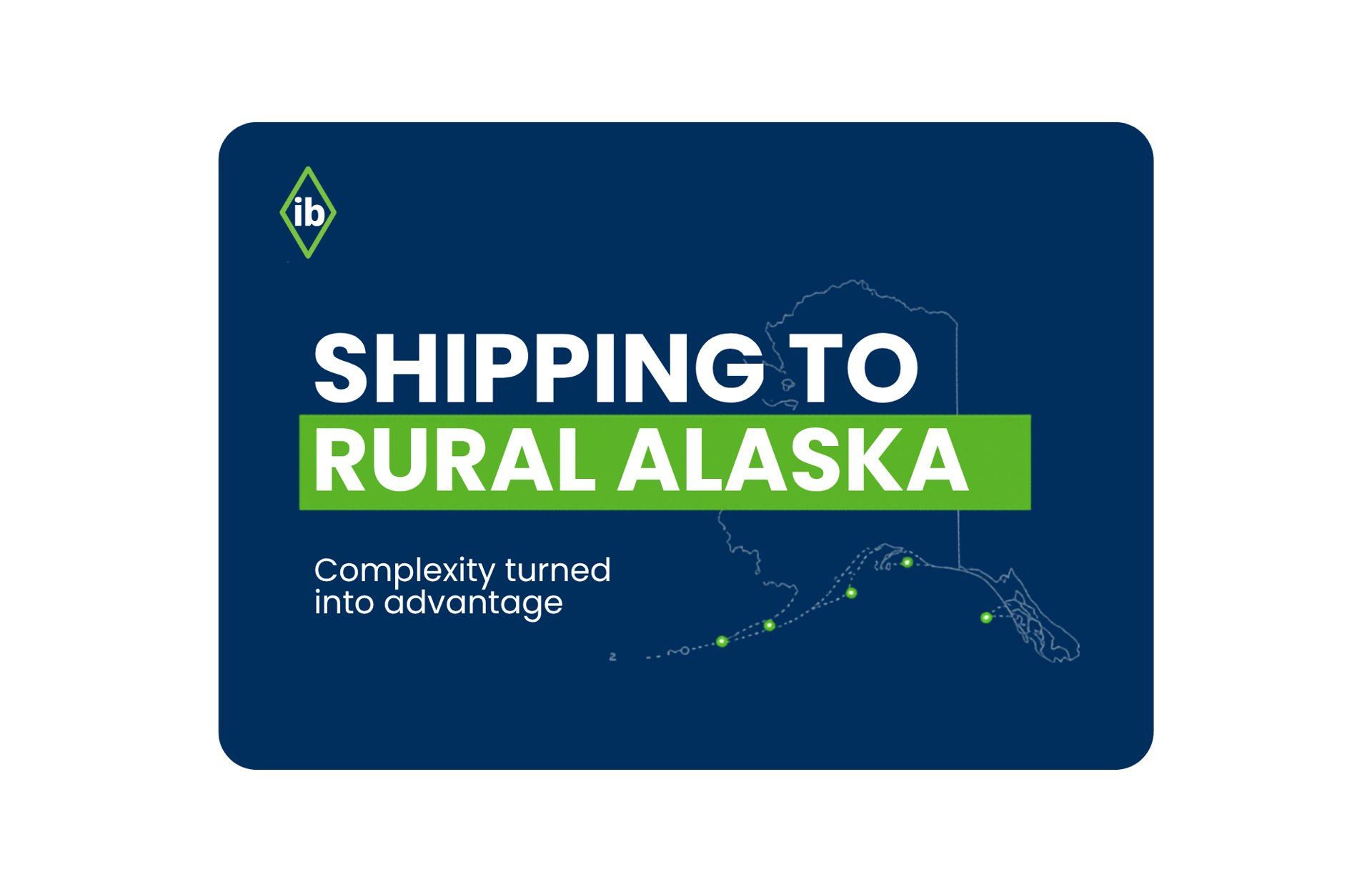
Shipping to rural Alaska succeeds when the delivery promise matches how the community is reached. A package bound for a road-connected town follows a different path than one bound for a village served only by scheduled air, and the window you show at checkout should reflect that difference. International Bridge has operated Alaska lanes for more than 20 years. The retailers who hold customer trust in this state set expectations by access category, then communicate clearly when conditions move.
This guide walks through the three access types, why rural windows extend by design, and what you can control at every step. If you ship with IB, the network handles all of it. Understanding it still matters, because it makes you a better judge of any carrier’s Alaska promises.
What “rural Alaska” means operationally
Rural Alaska is a transportation category, defined by how a community connects to the wider network. As of 2020, about 35% of Alaska’s public roads are paved, according to the Alaska Department of Transportation and Public Facilities, and large parts of the state have no road connection at all. Every rural delivery falls into one of three access types.
Road-connected communities. Places like Delta Junction and towns across the Matanuska-Susitna Borough sit on the road system. Parcels reach them by ground from a regional hub, and delivery behaves most like metro Alaska.
Air-only communities. Bethel, Nome, and Utqiagvik have no road link to the rest of the state. Scheduled air service is the year-round connection, and every parcel rides a flight with fixed departure days and weight limits.
Ferry and barge-dependent communities. Southeast towns such as Sitka, Petersburg, and Wrangell receive freight on sailing schedules. A parcel that misses a sailing waits for the next one.
Classify the destination first. Everything else in your Alaska strategy follows from it.
Why rural delivery windows extend by design
IB Non-Con delivers to metro Alaska in 2-5 business days. Rural windows extend beyond that, and the length varies by destination and season. Several factors stack: how the community is reached, how often the scheduled flight or sailing runs, what the weather is doing across each leg, and the capacity of the aircraft or vessel serving the route. A community served by three flights a week has three delivery opportunities a week, and a storm can take one of them away. No carrier changes that by promising harder. The transit philosophy behind this is covered in the definitive guide to shipping to Hawaii, Puerto Rico, and Alaska: build the window around how the lane realistically moves, then hit it consistently.
An extended window that holds is a better customer experience than a short window that breaks. Retailers who publish accurate rural windows see fewer support contacts and fewer abandoned repeat purchases than those who publish optimistic ones.
Communication is the variable you can control
The flight schedule to Nome belongs to the air carrier. What the customer knows, and when, belongs to you.
IB has people on the ground in Alaska. That presence means the network reads weather and disruption in real time and pushes proactive updates when a delivery window shifts, before the customer has to ask. When a customer does need help locating a package, they reach a person: live customer service runs Monday-Friday 24 hours and Saturday 9:30am-1:30pm MST, with tracking and self-service FAQ available 24/7.
For retailers, the practical moves are simple. Show an access-appropriate window at checkout. Confirm it in the shipping email. Pass along carrier updates when conditions change. In much of rural Alaska, online ordering is primary retail. Customers plan around delivery schedules the way they plan around everything else that arrives by air or barge. They reward accuracy, and they remember silence.
Weather and the cascade effect
Weather in Alaska compounds across legs. A storm that holds aircraft at a hub for a day does more than delay that day’s parcels. It pushes them onto the next scheduled departure to each downstream community, which may be two or three days out, and the parcels already booked on that departure compete for the same weight allowance. On a network that has not planned for it, one disruption at the start of the chain can move a rural delivery by most of a week.
A network built for Alaska plans for this. Recovery is engineered into the routing, ownership of the exception is assigned early, and the customer hears about the new window from the carrier first. Managed this way, a weather event becomes a delay the customer plans around, and rural Alaska stays a market worth serving.
Why this complexity is IB’s advantage, and your savings
This operational complexity is the reason many carriers add markups and extra fees for rural Alaska deliveries. Their networks treat these destinations as exceptions, and the surcharge covers the gap.
IB built its network for this market. Rural routing, recovery planning, and customer communication are built into the service, so IB can offer reliable rural delivery at a cost-effective rate. Retailers shipping with IB reduce shipping costs by approximately 30% compared with traditional national carriers. Smaller-volume shippers reach the same consolidation economics through the Box of Savings program. IB customers do not manage access types, flight schedules, or weather cascades. The network does.
What to look for in a rural Alaska shipping partner
Ask any prospective partner five things. Whether coverage is confirmed at the ZIP code level, because a low label rate to a destination the network barely serves becomes an expensive failed delivery. How delivery windows differ by access type. How the network detects disruption, and how fast updates reach you and your customer. Whether a customer can reach live support to locate a package. And how long the carrier has operated Alaska lanes, because recovery judgment in this state is earned, not configured.
Frequently asked questions about shipping to rural Alaska
How long does shipping to rural Alaska take?
Metro Alaska delivers in 2-5 business days, and rural destinations run on extended windows that vary by destination and season. The window follows the transport schedule serving each community, whether that is road, scheduled air, or ferry. Retailers should display the access-appropriate window at checkout so customers can plan around it.
Can you ship to Alaska communities with no road access?
Yes, communities such as Bethel, Nome, and Utqiagvik are served year-round by scheduled air service. Delivery depends on flight frequency and aircraft capacity, so windows are longer than road-connected destinations. Confirm a carrier covers the specific ZIP code before promising delivery to these communities.
Why do rural Alaska deliveries take longer than Anchorage?
Rural communities are served by scheduled flights or sailings with limited frequency, while Anchorage has daily lift and ground delivery. A parcel that arrives after a departure waits for the next scheduled one. The extended window reflects the schedule, and a carrier that builds the window around the schedule delivers inside it consistently.
What should retailers tell rural Alaska customers at checkout?
Show the extended delivery window for the destination, stated as a range. Customers in these communities plan purchases around known schedules and value an accurate window over an optimistic one. Proactive updates when a window shifts reduce support contacts and protect repeat purchase behaviour.
Talk to IB about your rural Alaska coverage.
A short conversation covers your Alaska destinations, realistic delivery windows, and what IB Non-Con handles for you. There is no commitment in the conversation.
→ Contact International Bridge: myib.com/contact-us
Keep reading
Definitive guide to shipping to Hawaii, Puerto Rico, and Alaska. The full picture of how IB builds predictable delivery across all three non-continental markets.
Alaska shipping page. Service coverage, transit windows, and how the Alaska network is structured.
Box of Savings. The aggregation program that gives smaller-volume shippers access to consolidation savings.
Rural Alaska shipping. How to reach remote addresses reliably.